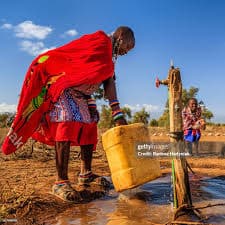
Maasai woman in red shúkà filling a jerrycan at a community tap, with a smiling child nearby—clean water access in ASAL pastoralist communities

Projects

Initiatives grouped under their parent programme—water, livelihoods, climate, gender equity, and more—for transparent reading from theme to project.

Projects in the landscape

MPIDO community impact — HPF photos (open album in Google Photos for the full set)
MPIDO community impact — CJRF (open album in Google Photos for the full set)
MPIDO community impact — Pawanka (open album in Google Photos for the full set)
MPIDO community impact — ACS 2 in photos (open album in Google Photos for the full set)
MPIDO community impact — MPIDO/Pawanka Olteyani community meeting (open album in Google Photos for the full set)
MPIDO community impact — Africa IP_WB Dialogue (open album in Google Photos for the full set)
MPIDO community impact — HPF photos (open album in Google Photos for the full set)
MPIDO community impact — CJRF (open album in Google Photos for the full set)
MPIDO community impact — Pawanka (open album in Google Photos for the full set)
MPIDO community impact — ACS 2 in photos (open album in Google Photos for the full set)
MPIDO community impact — MPIDO/Pawanka Olteyani community meeting (open album in Google Photos for the full set)
MPIDO community impact — Africa IP_WB Dialogue (open album in Google Photos for the full set)

Project directory

Scan every field project in one place—search or filter by programme, then open the full story or jump to the section below.

All projects, filterable by title and programme
ProjectActions
A herd rebuilt, a life restored — Kajiado West

Livelihoods

Water within reach — Ewuaso Ward, Kajiado West

Livelihoods

Farming against the odds — Osupuko, Kajiado County

Livelihoods

From margins to influence — Africa Climate Summits

Climate change and environment

Restoring land, restoring life — Narok County

Climate change and environment

Powering communities sustainably — renewable energy in action

Climate change and environment

Livelihoods

Rebuilding resilience and dignity through community-owned water systems, livestock services, mobility and restocking, and diversified climate-smart livelihood pathways.

Programme brief
Cattle on savanna at sunrise, Maasai Mara, Kenya — herd recovery and pastoral livelihood resilience after drought (illustrative stock)

A herd rebuilt, a life restored — Kajiado West

After losing nearly all livestock during the 2020–2023 drought, restocking with drought-resilient dairy goats rebuilt milk, nutrition, and income.

Project detail
  • Restocking support after drought wiped out herds
  • Drought-resilient dairy goats as a recovery pathway
  • Daily milk for households; surplus sold for income

After losing nearly all their livestock during the 2020–2023 drought, one family in Kajiado West was left without a source of income or stability.

Through MPIDO’s restocking support, they began again, this time with drought-resilient dairy goats.

Today, their herd is growing steadily. Milk is available daily for household consumption, improving nutrition, while surplus is sold to generate income.

What was once lost has become recovery. What seemed like an end has become a new beginning.

Maasai woman in red shúkà filling a jerrycan at a community tap, with a smiling child nearby—closer, safer water after community dam rehabilitation (illustrative stock)

Water within reach — Ewuaso Ward, Kajiado West

Rehabilitation of a community earth dam brought safer, closer water—less time fetching, more reliable supply for households and livestock.

Project detail
  • Moved water access from distant, unreliable sources
  • Earth dam rehabilitation led by MPIDO with the community
  • Reduced time searching for water; steadier supply in dry periods

For years, communities in Ewuaso relied on distant and unreliable water sources, often shared with livestock and wildlife.

Through the rehabilitation of a community earth dam, MPIDO helped transform this reality.

Today, water is available closer to homes. Households have access to a more reliable and safer source, time spent searching for water has reduced significantly, and livestock have a consistent supply even during dry periods.

What was once a seasonal struggle is now a dependable resource anchoring stability for the entire community.

Hands tending young green plants — small-scale irrigated farming and climate-smart diversification in ASAL Kenya (illustrative stock)

Farming against the odds — Osupuko, Kajiado County

Climate-smart irrigated farming as a complementary livelihood—vegetables for consumption and sale beyond dependence on livestock alone.

Project detail
  • Small-scale irrigated farming where agriculture was once considered unviable
  • Gradual skill- and confidence-building among adopting households
  • Pathway from experiment to sustained resilience

In a region where agriculture was once considered unviable, MPIDO introduced climate-smart farming as a complementary livelihood.

A group of households adopted small-scale irrigated farming, gradually building their skills and confidence.

Today, they grow vegetables for both consumption and sale, generating additional income and reducing their dependence on livestock alone.

What began as an experiment has become a pathway to resilience.

Climate change and environment

Rights-based climate and environmental leadership—stewardship and restoration, renewable energy, indigenous knowledge, IPNSCCC coordination, and influence from county finance to COPs.

Programme brief
Maasai community in traditional dress on the Maasai Mara grasslands — indigenous voice in continental climate spaces (illustrative stock)

From margins to influence — Africa Climate Summits

Pastoralist and indigenous leaders shaping continental climate discourse—priorities on land rights, mobility, and finance reflected in outcomes.

Project detail
  • Coordination and advocacy so leaders are present in high-level climate spaces
  • Land rights, mobility, and equitable finance in official outcomes
  • From exclusion toward influence

For years, Indigenous Peoples were largely excluded from high-level climate decision-making spaces.

Through MPIDO’s coordination and advocacy, pastoralist and Indigenous peoples' leaders are now actively shaping continental climate discourse. Their priorities, land rights, mobility, and equitable finance, are increasingly reflected in official outcomes.

What was once exclusion is now influence.

Maasai community on open savanna grassland, Kenya — community-led rangeland restoration and traditional management (illustrative stock)

Restoring land, restoring life — Narok County

Degraded rangeland regenerating through community-led restoration and revived traditional management—vegetation and livestock productivity returning.

Project detail
  • Community-led restoration and traditional management systems
  • Returning vegetation and improved livestock productivity
  • Dignity and resilience alongside ecological recovery

A once-degraded rangeland is now regenerating through community-led restoration and revived traditional management systems.

Vegetation is returning. Livestock productivity is improving.

And with it, dignity and resilience are being restored.

Solar panels on a rural rooftop — clean renewable electricity and cookstoves in pastoralist communities (illustrative stock)

Powering communities sustainably — renewable energy in action

Solar-powered systems and energy-saving cookstoves reducing firewood burden, improving health, and easing pressure on forests.

Project detail
  • Solar-powered systems for communities
  • Energy-saving cookstoves: less firewood collection for women
  • Health improvements and reduced pressure on forests

Access to clean energy has transformed daily life in several communities.

With solar-powered systems and energy-saving cookstoves, women spend less time collecting firewood, households experience improved health outcomes, and pressure on forests has reduced significantly.

Clean energy is no longer a luxury—it is a pathway to resilience.