Climate change and environment
Restoration, clean energy, indigenous knowledge, and IPNSCCC—local action linked to global climate and finance spaces.
Full programme scope
Rights-based climate and environmental leadership—stewardship and restoration, renewable energy, indigenous knowledge, IPNSCCC coordination, and influence from county finance to COPs.
Field moments
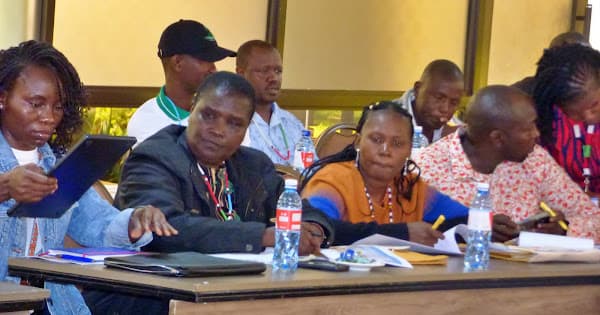
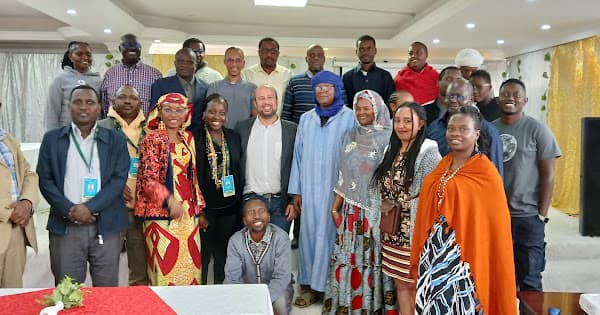
Three stills from this programme area—narrative and projects below.

Full programme narrative from MPIDO's programmes document (PDF).
Centering Indigenous Peoples' Leadership in Climate, Nature, and Policy
From the programme document
The first document section is open. Expand others, or use Delivery and Projects for quick scans. Each block shows a different field still in the bar.
Introduction
CLIMATE CHANGE & ENVIRONMENT PROGRAMME Centering Indigenous Peoples' Leadership in Climate, Nature, and Policy
Overview
Climate change is not a distant or abstract threat for Indigenous Peoples; it is a lived reality already reshaping livelihoods, ecosystems, and cultural identities. Across Africa, pastoralist and hunter-gatherer communities are confronting the compounded effects of a triple planetary crisis: climate change, biodiversity loss, and land degradation. Rangelands are shrinking, water sources are becoming unreliable, and traditional systems that once guaranteed resilience are under increasing pressure. Yet, despite contributing the least to global emissions, Indigenous Peoples remain among the least resourced, least represented, and least prioritised in climate governance and financing systems. MPIDO’s Climate Change & Environment Programme exists to fundamentally shift this imbalance. The programme positions Indigenous Peoples not as passive victims of climate change, but as rights-holders, knowledge custodians, and solution leaders. It is grounded in a rights-based, justice-driven approach that connects community-level realities with national, regional, and global policy processes, ensuring that Indigenous Peoples' voices are not only heard but actively shape climate decisions. This is not just about adaptation. It is about power, recognition, and leadership.
Why This Programme Matters
Africa is warming faster than the global average, and the impacts are intensifying across landscapes and livelihoods. For Indigenous Peoples’ communities, climate change is not just environmental; it is existential.
When ecosystems degrade, livelihoods collapse. When land is lost, culture weakens. When resources become scarce, conflict rises. At the same time, Indigenous Peoples continue to manage some of the most ecologically significant landscapes on the continent. Their knowledge systems, refined over generations, offer practical, tested solutions for resilience and sustainability. However, a critical gap persists: while solutions exist within communities, recognition, inclusion, and investment do not. This programme exists to close that gap.
 OUR APPROACH
1. Environmental Stewardship, Restoration & Sustainable Land Management
At the heart of climate resilience lies the health of ecosystems. MPIDO works alongside Indigenous Peoples' communities to restore degraded landscapes, strengthen traditional land management systems, and integrate them with modern conservation approaches. Across rangelands, forests, and water systems, the programme supports community-led restoration efforts that revive both ecological balance and cultural practices. Traditional systems such as rotational grazing, seasonal mobility, and sacred site protection are not only preserved but strengthened, ensuring that conservation remains rooted in Indigenous Peoples' governance. At the same time, these practices are complemented with modern approaches, including biodiversity monitoring, ecosystem rehabilitation techniques, and sustainable resource management systems. Water security is also central to this work. Through interventions such as earth dams, water pans, and catchment protection, communities are better able to withstand prolonged droughts while sustaining both households and livestock. The result is a visible transformation: degraded lands begin to regenerate, pasture availability improves, biodiversity returns, and communities reclaim their role as custodians of nature. This is conservation that is not imposed but lived, owned, and sustained.
2. Renewable Energy & Climate-Smart Livelihoods
Climate resilience cannot be achieved without addressing energy poverty. MPIDO promotes clean, accessible, and community-driven renewable energy solutions that reduce environmental degradation while improving the quality of life, particularly for women and youth. Solar-powered systems are being introduced across communities, including solar boreholes that ensure sustainable water access, solar lighting solutions that enhance safety and extend productive hours, and solar energy systems that reduce reliance on fossil fuels. At the household level, the programme promotes energy-saving cookstoves (jikos) that significantly reduce firewood consumption. This not only helps conserve forests but also reduces indoor air pollution, improving health outcomes for women and children.
These interventions go beyond technology. Communities are trained, organised, and supported to manage and sustain these systems, ensuring long-term impact. In this transition, MPIDO champions a Just Transition approach, one that ensures climate solutions do not come at the cost of Indigenous land rights, livelihoods, or cultural systems. Clean energy, in this context, is not just about reducing emissions; it is about dignity, equity, and sustainability.
3. Indigenous Knowledge Systems & Climate Solutions
Indigenous knowledge remains one of the most under-recognised yet powerful tools in climate action. MPIDO works to ensure that this knowledge is not lost but protected, revitalised, and elevated to inform contemporary climate strategies. Through documentation, intergenerational learning, and structured knowledge-sharing platforms, communities are supported to preserve practices such as traditional weather forecasting, livestock management, and ecosystem stewardship. Crucially, this knowledge is translated into formats that can influence policy and engage with scientific systems, bridging the gap between tradition and modern climate discourse. The result is a more grounded, context-specific approach to climate action one that reflects lived realities rather than imposed solutions.
4. Climate Governance, Advocacy & Multi-Level Convenings
Transforming systems requires presence, influence, and coordination across all levels of decision-making. MPIDO plays a strategic leadership role in ensuring Indigenous Peoples are not only present but also influential across community, national, regional, and global platforms. At the community level, MPIDO anchors its work where climate impacts are most deeply felt within Indigenous Peoples’ territories and lived realities. Through sustained dialogues, community assemblies, and inclusive convenings, the organization brings together elders, women, youth, and traditional and local leadership to collectively identify priorities, strengthen governance systems, and shape locally grounded climate responses. These spaces go beyond consultation. They are platforms for decision-making, consensus-building, and reclaiming agency where Indigenous knowledge is validated, community voices are unified, and locally led solutions are defined. In doing so, MPIDO ensures that climate action is not externally imposed, but internally driven, culturally rooted, and collectively owned. At the national level, MPIDO plays a strategic role in shaping climate governance and policy processes by actively engaging in key coordination and decision-making platforms, including the Indigenous Peoples National Steering Committee on Climate Change (IPNSCCC), as well as other government-led and multi-stakeholder frameworks. Through these spaces, MPIDO ensures that Indigenous Peoples are meaningfully represented in national climate discourse, contributing to policy development, influencing legislative frameworks, and strengthening accountability in climate action.
The organisation supports Indigenous communities to engage in national processes such as climate planning, budgeting, and implementation, ensuring that their priorities, knowledge systems, and rights are reflected in country-level strategies. This includes engagement in initiatives such as FLLoCA (Financing Locally-Led Climate Action), among others, as entry points for advancing locally led solutions, strengthening community resilience, and improving access to climate finance. Beyond participation, MPIDO works to build the capacity of Indigenous leaders and institutions to effectively navigate these spaces, transforming engagement into influence and ensuring that national climate systems become more inclusive, equitable, and responsive to the realities on the ground. At the regional level, MPIDO plays a convening and coordinating role that connects Indigenous Peoples’ movements across Africa. Through platforms such as the Africa Indigenous Pastoralists Continental Platform, MPIDO brings together voices from across countries to align advocacy priorities, strengthen solidarity, and amplify a unified regional agenda. These regional convenings serve as critical spaces for cross-learning, strategy development, and collective positioning, enabling communities facing similar challenges to exchange experiences, influence regional processes, and engage as a cohesive force. What emerges is not just coordination but a growing movement that transforms fragmented voices into a powerful, collective regional presence. At the continental and global levels, MPIDO has established itself as a leading facilitator and amplifier of Indigenous Peoples’ participation and influence across key climate and environmental processes. MPIDO has consistently supported and led engagement in major platforms, ensuring that Indigenous Peoples' perspectives shape outcomes across the full spectrum of global environmental governance. This includes active participation and coordination in: Africa Climate Summit I (Nairobi), where Indigenous Peoples' priorities contributed to shaping the Nairobi Declaration and elevating the visibility of pastoralist and Indigenous issues within continental climate discourse Africa Climate Summit II (Addis Ababa), where coordinated Indigenous peoples’ engagement strengthened recognition of land rights, mobility as a climate adaptation strategy, and the need for equitable access to climate finance. UNFCCC Conference of Parties (COP) processes, where Indigenous Peoples’ representatives are supported to engage in negotiations, side events, and technical discussions, bringing grounded perspectives into global climate policy spaces UNCCD and UNCBD processes, ensuring that advocacy across climate change, land, and biodiversity remains interconnected and that Indigenous peoples’ priorities are reflected across all three Rio Conventions Global Climate Weeks and international policy platforms, where MPIDO connects grassroots leadership with global decision-makers, bridging the gap between local realities and international commitments Across all these spaces, MPIDO’s role goes beyond enabling presence; it is about building influence, shaping narratives, and securing space for Indigenous peoples' leadership in defining climate solutions.
From community dialogues to global negotiations, the approach is consistent: ensure that Indigenous Peoples' voices are not just included but are central, decisive, and transformative.
5. Climate Finance, Carbon Systems & Capacity Strengthening
One of the most critical barriers facing Indigenous Peoples’ communities is access to climate finance. MPIDO addresses this by investing in capacity strengthening at multiple levels, from community leaders to government actors, ensuring a deeper understanding of climate finance systems, carbon markets, and funding mechanisms. Communities are supported to engage in processes such as climate budgeting, social accountability, and finance tracking, equipping them not just to receive funding but to influence how it is designed and distributed. Training on mechanisms such as carbon markets and REDD+ is carefully approached through a rights-based lens, ensuring communities understand both opportunities and risks. The goal is clear: to shift Indigenous Peoples from being passive recipients of funding to active decision-makers within climate finance systems.
6. Voices of the Earth: From Participation to Power
Anchoring all this work is a growing movement, Voices of the Earth, which seeks to transform how Indigenous Peoples are positioned within global climate discourse. This initiative amplifies Indigenous voices, strengthens solidarity across communities, and drives coordinated advocacy across platforms from local dialogues to international negotiations. It is focused on reshaping narratives, influencing policy, and ensuring that Indigenous peoples' leadership is not symbolic but structural. This is not about inclusion for its own sake. It is about reclaiming space, shifting power, and shaping the future.
From Margins to Influence – Africa Climate Summits
For years, Indigenous Peoples were largely excluded from high-level climate decision-making spaces. Through MPIDO’s coordination and advocacy, pastoralist and Indigenous peoples' leaders are now actively shaping continental climate discourse. Their priorities, land rights, mobility, and equitable finance, are increasingly reflected in official outcomes. What was once exclusion is now influence.
Restoring Land, Restoring Life – Narok County
A once-degraded rangeland is now regenerating through community-led restoration and revived traditional management systems. Vegetation is returning. Livestock productivity is improving. And with it, dignity and resilience are being restored.
Powering Communities Sustainably – Renewable Energy in Action
Access to clean energy has transformed daily life in several communities.
With solar-powered systems and energy-saving cookstoves:
- Women spend less time collecting firewood
- Households experience improved health outcomes
- Pressure on forests has reduced significantly
Clean energy is no longer a luxury—it is a pathway to resilience.
THE DIFFERENCE WE MAKE
This programme goes beyond environmental action. It is about justice, ensuring those most affected are heard. It is about recognition, valuing Indigenous knowledge and systems. It is about power shifting who decides, who benefits, and who leads.
Our Approach in One Line
We move Indigenous Peoples from the margins of climate conversations to the centre of climate solutions.
Delivery & reach
What we deliver on the ground — 4 focus points
Delivery & reach
- Landscape restoration and sustainable land management owned and led by communities.
- Clean energy solutions tied to water, safety, health, and reduced pressure on forests.
- Knowledge documentation, intergenerational learning, and policy translation.
- Multi-level advocacy and coordination: IPNSCCC, continental convenings, COPs, Rio conventions, climate finance literacy, and Voices of the Earth solidarity.
In the field
Field projects in this programme — 3
In the field
- From margins to influence — Africa Climate Summits
Pastoralist and indigenous leaders shaping continental climate discourse—priorities on land rights, mobility, and finance reflected in outcomes.
View - Restoring land, restoring life — Narok County
Degraded rangeland regenerating through community-led restoration and revived traditional management—vegetation and livestock productivity returning.
View - Powering communities sustainably — renewable energy in action
Solar-powered systems and energy-saving cookstoves reducing firewood burden, improving health, and easing pressure on forests.
View


