Livelihoods
Water systems, animal health, mobility, restocking, and climate-smart livelihoods owned by communities.
Full programme scope
Rebuilding resilience and dignity through community-owned water systems, livestock services, mobility and restocking, and diversified climate-smart livelihood pathways.
Field moments
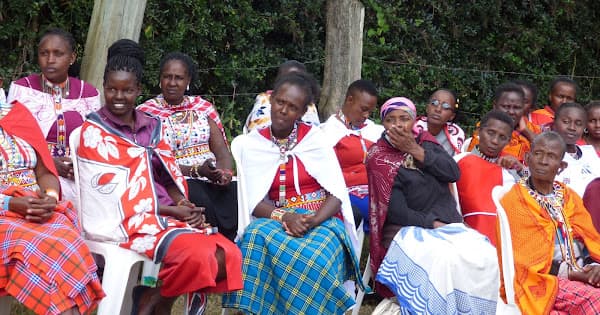
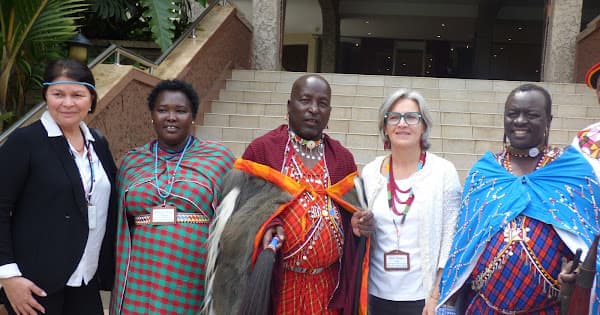
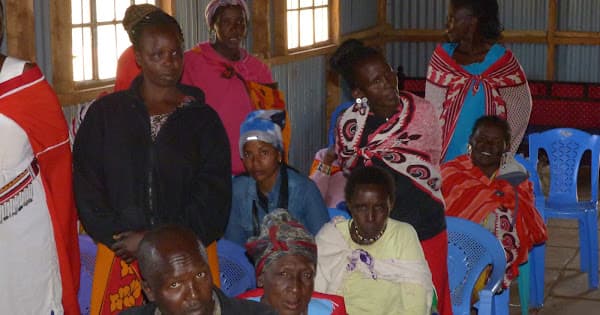
Three stills from this programme area—narrative and projects below.
Full programme narrative from MPIDO's programmes document (PDF).
Rebuilding Resilience. Restoring Dignity. Sustaining Indigenous Futures.
From the programme document
The first document section is open. Expand others, or use Delivery and Projects for quick scans. Each block shows a different field still in the bar.
Introduction
LIVELIHOODS PROGRAMME Rebuilding Resilience. Restoring Dignity. Sustaining Indigenous Futures.
Overview
Across Kenya’s arid and semi-arid lands, livelihoods are not merely economic activities; they are the foundation of identity, culture, and continuity. For pastoralist and hunter-gatherer communities, survival has always been deeply intertwined with the land, livestock, and natural systems that sustain them. Today, that balance is under strain. Climate change, environmental degradation, and shifting socio-economic realities are rapidly reshaping traditional ways of life. What once worked for generations is now under pressure from recurring droughts, shrinking rangelands, and increasing uncertainty. MPIDO’s Livelihoods Programme responds to this reality not by replacing Indigenous systems but by strengthening, adapting, and future-proofing them. It is designed as a resilience engine, one that builds on Indigenous knowledge while introducing practical, climate-responsive innovations. Across Kajiado, Narok, Baringo, and Nakuru, the programme supports communities to move beyond survival towards a future where they can adapt, recover, and thrive despite recurring shocks. At its core, this work is about restoring balance between people, livelihoods, and the environment.
Why This Programme Matters
For pastoralist communities, livestock is far more than an economic asset. It is food, income, social security, and a symbol of dignity and belonging. Entire cultural systems are built around it.
But today, this system is under unprecedented pressure. Drought cycles that once occurred over a decade now return every few years, leaving little time for recovery. The devastating 2020–2023 drought did not just wipe out herds; it disrupted entire ways of life. Families lost their primary source of income, nutrition levels declined, and traditional coping systems weakened under the weight of repeated shocks. At the same time, water scarcity continues to define daily existence. In many communities, women and girls still walk long distances in search of water, losing valuable time that could otherwise be spent on education or economic activities. The sources they rely on are often unreliable, unsafe, and contested. In this context, vulnerability is not accidental; it is structural. MPIDO’s response is therefore deliberate and focused: to build resilience at the intersection of water, livestock, and diversified livelihoods, where the impacts of climate change are most deeply felt.
OUR APPROACH
Water: From Scarcity to Stability
Water is the starting point of everything: health, livelihoods, and survival itself. In ASAL areas, its absence defines vulnerability, while its presence unlocks opportunity. MPIDO invests in long-term, community-owned water systems that serve both people and livestock, transforming water from a daily struggle into a foundation for stability. Across programme areas, communities are supported to harvest and store seasonal rains through the construction and rehabilitation of earth dams and water pans. Boreholes are drilled and solarized to ensure reliable, year-round access, while shallow wells, rock catchments, and protected springs provide additional sources tailored to local contexts. Beyond infrastructure, the programme strengthens governance systems by supporting community institutions such as Water Resource Users Associations, ensuring that water resources are managed sustainably and equitably. The transformation is immediate and profound. Journeys that once took hours are reduced to short walks. Access to clean and reliable water improves household health, sustains livestock during dry periods, and reduces competition over scarce resources. Water, once a source of hardship, becomes a pillar of resilience.
Livestock: Protecting the Heart of Pastoral Life
Livestock remains the backbone of pastoralist livelihoods and often the first casualty of climate shocks. MPIDO works to protect and rebuild this critical system by strengthening animal health services, restoring essential infrastructure, and supporting adaptive livestock management practices. Community Animal Health Workers are trained and equipped to provide frontline services, while vaccination campaigns reduce disease-related losses. Infrastructure such as cattle dips, livestock crushes, and market facilities are rehabilitated, improving both animal health and market access.
The programme also recognises the importance of mobility as a traditional climate adaptation strategy, supporting cross-border grazing systems and strengthening regional coordination to ensure livestock can access pasture and water even during periods of scarcity. Where losses have already occurred, MPIDO supports restocking as a pathway to recovery. This is not simply about replacing animals; it is about restoring livelihoods, dignity, and stability. Households are supported with drought-resilient, fast-reproducing livestock such as dairy goats, combined with training and animal health support. These animals are well-suited to harsh environments, providing both nutrition and income within a shorter recovery period. As herds begin to rebuild, so does confidence. Milk returns to households, income opportunities re-emerge, and families begin to regain a sense of control over their future.
Diversification: Expanding Pathways for Resilience
While pastoralism remains central, it can no longer stand alone. Changing climate conditions, land fragmentation, and evolving economic realities require communities to diversify their sources of livelihood without losing their identity. MPIDO supports the development of complementary livelihood pathways that enhance resilience while respecting cultural systems. In areas where conditions allow, climate-smart agriculture is introduced as a strategic buffer against drought. Communities are supported to adopt both irrigated and rain-fed farming, depending on local suitability, with access to seeds, tools, and technical knowledge. This is coupled with the establishment of community seed banks, improved storage systems, and linkages to markets, ensuring that production translates into both food security and income. The shift is gradual but significant. Households begin to rely on multiple sources of livelihood rather than a single system. Food availability improves, income becomes more stable, and vulnerability to climate shocks is reduced. Diversification, in this sense, is not a departure from tradition—it is an evolution of it.
A Herd Rebuilt, A Life Restored – Kajiado West
After losing nearly all their livestock during the 2020–2023 drought, one family in Kajiado West was left without a source of income or stability. Through MPIDO’s restocking support, they began again, this time with drought-resilient dairy goats. Today, their herd is growing steadily. Milk is available daily for household consumption, improving nutrition, while surplus is sold to generate income. What was once lost has become recovery. What seemed like an end has become a new beginning.
Water Within Reach – Ewuaso Ward, Kajiado West
For years, communities in Ewuaso relied on distant and unreliable water sources, often shared with livestock and wildlife.
Through the rehabilitation of a community earth dam, MPIDO helped transform this reality. Today, water is available closer to homes. Households have access to a more reliable and safer source, time spent searching for water has reduced significantly, and livestock have a consistent supply even during dry periods. What was once a seasonal struggle is now a dependable resource anchoring stability for the entire community.
Farming Against the Odds – Osupuko, Kajiado County
In a region where agriculture was once considered unviable, MPIDO introduced climate-smart farming as a complementary livelihood. A group of households adopted small-scale irrigated farming, gradually building their skills and confidence. Today, they grow vegetables for both consumption and sale, generating additional income and reducing their dependence on livestock alone. What began as an experiment has become a pathway to resilience.
THE DIFFERENCE WE MAKE
This programme is not about short-term relief or temporary fixes. It is about addressing vulnerability at its roots and strengthening the systems that communities depend on while creating space for adaptation and growth. It is about ensuring that livelihoods are not only sustained but also dignified, resilient, and future-ready.
Our Approach in One Line
We do not simply respond to crises; we build the capacity to withstand them, recover from them, and grow beyond them.
Delivery & reach
What we deliver on the ground — 4 focus points
Delivery & reach
- Water harvesting, storage, and governance so journeys to water shorten and health, livestock, and coexistence around sources improve.
- Community animal health workers, vaccination campaigns, and infrastructure that supports animal health and market access.
- Support for mobility and cross-border grazing coordination as adaptation; restocking and recovery after shocks.
- Climate-smart complementary farming, seed banks, and irrigation where ecologically appropriate—with evidence from communities moving from experiment to sustained resilience.
In the field
Field projects in this programme — 3
In the field
- A herd rebuilt, a life restored — Kajiado West
After losing nearly all livestock during the 2020–2023 drought, restocking with drought-resilient dairy goats rebuilt milk, nutrition, and income.
View 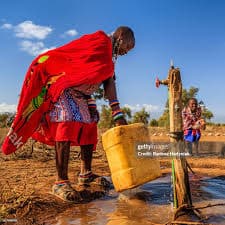 Water within reach — Ewuaso Ward, Kajiado West
Rehabilitation of a community earth dam brought safer, closer water—less time fetching, more reliable supply for households and livestock.
View- Farming against the odds — Osupuko, Kajiado County
Climate-smart irrigated farming as a complementary livelihood—vegetables for consumption and sale beyond dependence on livestock alone.
View

