Strategic partnerships
Co-designing policy, climate finance, and accountability with state and global partners—from national instruments to COPs.
Full programme scope
Deliberate partnerships with state institutions, constitutional bodies, and global frameworks—moving Indigenous Peoples from consultation to co-design of policy, climate finance, and accountability systems.
Field moments
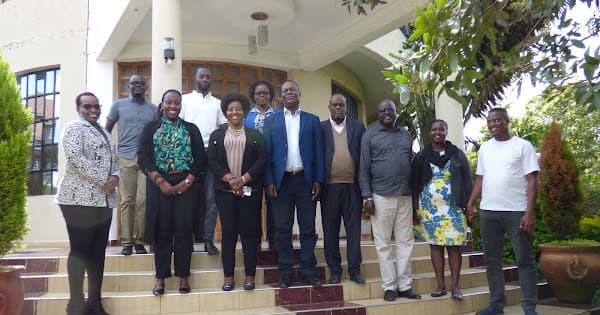
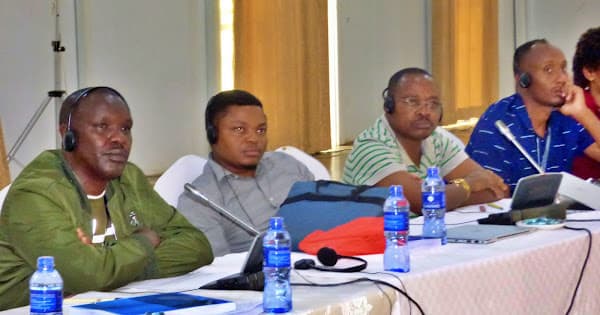
Three stills from this programme area—narrative and projects below.


Full programme narrative from MPIDO's programmes document (PDF).
Bridging Indigenous Peoples, Institutions, and Global Systems for Rights, Climate Justice, and Structural Change
From the programme document
The first document section is open. Expand others, or use Delivery and Projects for quick scans. Each block shows a different field still in the bar.
Introduction
Strategic Partnerships Program Bridging Indigenous Peoples, Institutions, and Global Systems for Rights, Climate Justice, and Structural Change The Strategic Partnerships Programme is one of MPIDO’s most influential pillars, designed to position Indigenous Peoples not at the periphery of governance and development processes but at the centre of decision-making, policy design, and resource allocation. At its core, the programme recognises that sustainable change for Indigenous Peoples cannot be achieved in isolation. It must be built through deliberate, structured, and sustained partnerships with state institutions, constitutional bodies, development actors, and global frameworks. This is where policy meets practice and where community realities are translated into national and international action. MPIDO therefore operates as a strategic bridge connecting grassroots Indigenous Peoples communities, county, national governance systems, and global policy arenas, ensuring that Indigenous Peoples’ rights, knowledge, and priorities shape the systems that affect their lives.
Shaping National Policy and Institutional Reform
A defining contribution of this programme has been MPIDO’s role in shaping the national discourse and architecture on inclusion, equity, and Indigenous Peoples’ rights in Kenya. One of the most significant milestones is MPIDO’s long-term engagement in the development of the National Policy on Ethnic Minorities, Marginalised and Indigenous Communities, developed in collaboration with the National Gender and Equality Commission (NGEC) and the Executive Office of the President through the Minorities and Marginalised Affairs Unit (MMAU). This policy process was not a technical exercise alone; it was a deeply political and participatory journey that brought historically excluded communities into national decision-making spaces for the first time in a structured and sustained way. Through this process, MPIDO ensured that Indigenous Peoples were not simply consulted but actively shaped the content, direction, and spirit of the policy. Communities across pastoralist and hunter-gatherer regions were mobilized into consultations, validation forums, and dialogue platforms, ensuring that lived realities from rangelands, forests, and marginalised territories were reflected in national policy language. The policy has now reached a critical stage in its journey. It has undergone extensive multi-stakeholder review processes, secured Cabinet approval, and was publicly launched by the President during the UN International Day of Minorities, marking a historic recognition of structural exclusion and the need for corrective policy frameworks under Article 56 of the Constitution of Kenya. It is currently progressing to Parliament as a Sessional Paper, which will provide the formal legal and policy foundation for implementation. This will not only institutionalize inclusion but also establish coordination mechanisms across national and county governments to ensure accountability, resource allocation, and implementation fidelity. MPIDO’s role throughout this process has been strategic and multi-dimensional: translating complex policy frameworks into accessible community knowledge, ensuring grassroots priorities shape national language, strengthening accountability through human rights alignment, and continuously bridging the gap between communities and state institutions.
Climate Finance, Local Action, and Indigenous Leadership (FLLoCA and Beyond)
Within the evolving climate governance landscape, MPIDO has positioned Indigenous Peoples as key actors in climate finance and locally-led resilience programming. Through strategic engagement with the National Treasury and Economic Planning, MPIDO has supported Indigenous Peoples’ participation in the Financing Locally-Led Climate Action (FLLoCA) programme, a major World Bank-supported initiative aimed at strengthening county-level climate resilience planning and financing. However, MPIDO’s engagement extends far beyond FLLoCA. It is part of a broader effort to ensure Indigenous Peoples are embedded in all climate finance, planning, and implementation systems at national and county levels. A critical entry point for this work has been the Indigenous Peoples National Steering Committee on Climate Change (IPNSCCC), which MPIDO supports as a coordination and convergence platform. Through this structure, Indigenous voices are consolidated, structured, and elevated into formal government planning and climate governance processes. Through these engagements, MPIDO has facilitated meaningful participation of Indigenous Peoples in climate budgeting discussions, county climate change fund planning, and adaptation financing frameworks. Communities are increasingly being recognized not as passive recipients of climate aid, but as knowledge holders and co-designers of resilience solutions. Capacity strengthening has also been central to ensuring that communities understand climate finance systems, carbon markets, and emerging global mechanisms that are often complex and exclusionary. This has enabled Indigenous Peoples representatives to engage more confidently and effectively in both technical and political climate spaces.
 Human Rights, Climate Justice, and Global Accountability Systems
MPIDO’s strategic partnerships extend into the human rights ecosystem, where climate change is increasingly understood as a justice issue rather than only an environmental one. In collaboration with the State Department for Justice, Human Rights and Constitutional Affairs and the Office of the United Nations High Commissioner for Human Rights (OHCHR), MPIDO has supported capacity-building initiatives aimed at strengthening Indigenous Peoples’ understanding and application of human rights frameworks in climate and governance contexts. These engagements have been particularly important in emerging areas such as carbon markets, land-based investments, and climate finance mechanisms, where rights risks are high and protections are often weak or unclear. Through these partnerships, Indigenous peoples’ communities are being equipped to understand their rights within national constitutions and international instruments, enabling them to actively engage in accountability processes, policy dialogue, and rights protection mechanisms. This has strengthened the intersection between climate action and human rights, ensuring that climate interventions do not become new pathways for exclusion or dispossession.
Regional, Continental, and Global Policy Influence
MPIDO’s strategic partnerships are not limited to national frameworks; they extend into regional, continental, and global governance spaces where major decisions on climate, land, and biodiversity are made. At the continental level, MPIDO has played a key role in shaping Indigenous Peoples’ engagement in major platforms such as the Africa Climate Summit I (Nairobi) and Africa Climate Summit II (Addis Ababa). Through these convenings, Indigenous Peoples' priorities on land rights, pastoral mobility, climate finance access, and nature-based solutions have been elevated into continental policy discussions and declarations. At the global level, MPIDO continues to facilitate Indigenous Peoples’ participation in the UNFCCC Conference of Parties (COPs), where climate negotiations take place, ensuring that Indigenous Peoples perspectives are not only heard but integrated into global climate frameworks. In addition, MPIDO actively engages in the United Nations Permanent Forum on Indigenous Issues (UNPFII), a key global platform where Indigenous Peoples from across the world converge to review progress on human rights, development, environment, education, and culture. Through UNPFII, MPIDO contributes to global Indigenous solidarity, policy dialogue, and accountability on states’ commitments to Indigenous Peoples’ rights, while also ensuring that African pastoralist and hunter-gatherer perspectives are fully represented in global Indigenous governance discussions. A further important space has been New York Climate Week, where MPIDO has supported Indigenous peoples’ leaders and partners to engage directly with global policymakers, climate financiers, and development actors. This platform has provided a critical interface between grassroots Indigenous Peoples’ realities and global climate investment conversations, particularly around climate finance, carbon markets, and just transition frameworks. It has also strengthened direct advocacy with donors and multilateral institutions, ensuring that funding priorities reflect community-defined needs rather than externally imposed agendas. Similarly, engagement in the UN Convention to Combat Desertification (UNCCD) and the Convention on Biological Diversity (UNCBD) has enabled MPIDO to advocate for integrated approaches that connect land, biodiversity, and climate justice as interlinked systems rather than separate agendas. Through global climate weeks and international policy platforms, MPIDO ensures that grassroots realities from African rangelands and ecosystems are not lost in global negotiations, but instead actively shape the language, priorities, and financing decisions of the international community.
Approach and Strategic Value
The Strategic Partnerships Programme is anchored in a clear philosophy: Indigenous Peoples must be recognized as equal partners in governance, not beneficiaries of external interventions. MPIDO’s value lies in its ability to move seamlessly across multiple systems, community, national, regional, and global levels while maintaining authenticity and trust at the grassroots level. This enables MPIDO to translate lived experiences into policy language and policy frameworks back into community understanding. It also allows MPIDO to convene unlikely alliances bringing together governments, communities, development partners, and international institutions into shared spaces of dialogue and negotiation.
Impact Positioning
Through this programme, MPIDO has transitioned from being primarily an advocacy voice to becoming a recognized policy influencer and strategic governance actor.
Its contributions are visible in:
- National policy frameworks that now formally recognize Indigenous Peoples and marginalized communities
- Increased Indigenous Peoples’ participation in climate finance and governance systems
- Strengthened institutional mechanisms such as IPNSCCC that anchor Indigenous Peoples participation in state processes
- Enhanced visibility and representation of Indigenous Peoples in global climate and biodiversity negotiations
Ultimately, the Strategic Partnerships Programme is reshaping how governance itself is understood, moving it from top-down decision-making to inclusive, multi-layered systems where Indigenous Peoples are not only included, but are actively shaping the future of policy, climate action, and sustainable development in Kenya and beyond.
Delivery & reach
What we deliver on the ground — 4 focus points
Delivery & reach
- National policy pathways that formally recognise Indigenous Peoples and marginalised communities—with instruments progressing toward parliamentary and implementation phases.
- Climate finance literacy and entry through FLLoCA and related mechanisms, anchored by IPNSCCC coordination.
- Rights-aligned engagement with justice institutions and OHCHR on emerging risks in carbon markets and large investments.
- Continental and global representation linking grassroots realities to COPs, Rio Convention processes, and high-level climate diplomacy.