Governance programme
Land and resource rights, leadership, and dialogue—securing tenure and building coexistence across systems.
Full programme scope
Advancing rights, securing land, and strengthening indigenous leadership—human rights from awareness to agency; tenure and resource governance; legitimate leadership across customary and formal systems; and structured dialogue for coexistence.
Field moments
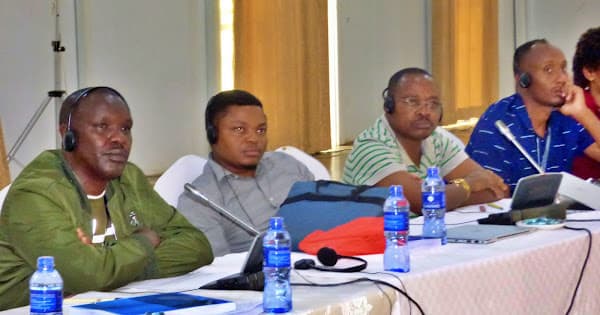
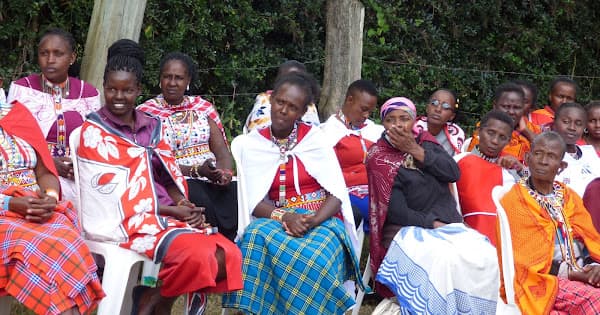
Three stills from this programme area—narrative and projects below.

Full programme narrative from MPIDO's programmes document (PDF).
Advancing Rights. Securing Land. Strengthening Indigenous Leadership.
From the programme document
The first document section is open. Expand others, or use Delivery and Projects for quick scans. Each block shows a different field still in the bar.
Governance programme — overview
For Indigenous pastoralist and hunter-gatherer communities, governance is not an abstract concept defined only by policies and institutions; it is lived daily through relationships with land, systems of leadership, and deeply rooted cultural values that guide collective decision-making. For generations, these systems ensured balance: between people and nature, between access and responsibility, and between rights and accountability. Today, that balance has been significantly disrupted.
Across Kenya’s arid and semi-arid lands, Indigenous communities continue to face structural injustices that have accumulated over time: historical land dispossession, elite-driven land grabbing, exclusion from formal governance processes, and weak institutional recognition. These challenges are now compounded by emerging pressures, including climate change, commercial land interests, carbon markets, and large-scale investments that often proceed without meaningful community consent. The result is not just marginalisation; it is the systematic erosion of rights, identity, and self-determination. MPIDO’s Governance Programme exists to reverse this trajectory. It is designed to rebuild power from the ground up, ensuring that Indigenous Peoples are not treated as passive beneficiaries of governance systems but as rights-holders, decision-makers, and architects of their own futures. At its core, the programme strengthens the connection between customary governance systems and formal state institutions, creating pathways where Indigenous peoples' leadership is recognised, respected, and able to influence decisions at every level. This is governance as it should be: inclusive, accountable, and rooted in justice.
Human rights — from awareness to agency
The foundation of the programme lies in advancing human rights not only as legal principles but also as lived realities within communities. For many Indigenous peoples’ groups, exclusion from governance has historically meant limited awareness of rights, restricted access to justice systems, and minimal influence over decisions that directly affect their lives. MPIDO works to change this by transforming rights from abstract concepts into practical tools for action. Through sustained engagement, communities are supported to understand and claim their rights, ranging from land and cultural rights to participation in governance and the right to Free, Prior and Informed Consent (FPIC). Civic education is not delivered as a one-time intervention, but as a continuous process that builds confidence, awareness, and collective agency. Community dialogues, validation forums, and participatory processes create spaces where people can openly discuss governance challenges, interrogate policies, and develop shared positions. These platforms ensure that voices that are often excluded, those of women and youth, are brought into the centre of decision-making. Beyond the community level, MPIDO actively bridges these voices into formal governance spaces. Indigenous peoples' representatives are supported to engage with County Assemblies, national ministries, parliamentary processes, and constitutional commissions, ensuring that community perspectives inform policy development and implementation. The programme also extends into regional and continental human rights spaces. Through engagement with platforms such as the African Commission on Human and Peoples’ Rights, the East African Commission, MPIDO amplifies Indigenous Peoples' concerns beyond national borders, placing them within broader human rights discourse and accountability frameworks.
Where necessary, advocacy is complemented by legal action. Strategic litigation is used not only to address specific injustices but to set precedents that strengthen the protection of Indigenous peoples' rights more broadly. Over time, this work creates a powerful shift: communities move from being observers of governance to active participants who can question, influence, and hold systems accountable.
LAND & NATURAL RESOURCE RIGHTS: RECLAIMING TERRITORIES, DEFENDING THE FUTURE
Land is the anchor of Indigenous Peoples' lives. It is where culture is practised, livelihoods are sustained, and identity is preserved. Yet for many communities, land remains the most contested and insecure resource. MPIDO’s Governance Programme places land and natural resource rights at the centre of its work, recognising that without secure tenure, all other aspects of development remain fragile. The programme supports communities to navigate complex land governance systems, strengthening their capacity to claim, manage, and defend their territories. This includes facilitating processes around communal land registration, clarifying governance structures, and supporting the development of locally grounded land management frameworks. At the same time, MPIDO engages directly with cases of injustice. In areas such as Osupuko and Kedong, communities in Kajiado County have been supported to challenge irregular land allocations and resist dispossession driven by external interests. These interventions are not isolated; they are part of a broader effort to confront systemic patterns of land grabbing and exclusion. Emerging threats, such as carbon markets, wildlife conservation and large-scale investments, present new and often poorly understood risks. MPIDO works with communities to unpack these complex systems, ensuring that decisions around land use are informed, consensual, and beneficial. In Oldonyonyokie, Kajiado County, this approach led to the halting of unfavourable carbon agreements, demonstrating the importance of informed community engagement. The programme also actively promotes inclusive land governance. Efforts to strengthen women’s land rights are particularly significant in contexts where cultural norms have historically limited access and ownership. By supporting women’s participation in land processes, including in areas such as Loita, Narok County, the programme contributes to more equitable and sustainable systems. Natural resource governance is approached with the same level of depth. Communities are supported to develop negotiated frameworks for sharing grazing lands, water sources, and other resources, reducing conflict while promoting sustainable use. In cross-border landscapes, especially between Kenya and Tanzania, MPIDO facilitates dialogue that recognises the ecological realities of pastoralism. By supporting transboundary governance approaches, the programme ensures that mobility, one of the most effective traditional adaptation strategies, is protected rather than restricted. Through this work, land is not only secured, but it is reclaimed as a living system that sustains both present and future generations.
LEADERSHIP: BUILDING POWER, SHAPING SYSTEMS
Strong governance requires strong leadership, leadership that is rooted in legitimacy, inclusivity, and the ability to navigate both traditional and formal systems. MPIDO invests heavily in building this leadership across all levels. At the community level, customary institutions such as councils of elders are strengthened and supported to continue playing their role in governance, conflict resolution, and cultural preservation. At the same time, deliberate efforts are made to expand leadership spaces to include youth and women, ensuring that governance structures reflect the diversity of the communities they serve. Intergenerational dialogue is a key component of this work. By creating spaces where elders and younger generations can exchange knowledge and perspectives, the programme ensures continuity while allowing for adaptation to changing realities. Leadership development also extends beyond community structures. Indigenous Peoples leaders are supported to engage effectively in county, national, and regional processes, equipping them with the knowledge, confidence, and networks needed to influence decisions. To sustain this engagement, MPIDO supports the establishment of community governance infrastructure, including resource centres and local platforms that serve as hubs for civic education, policy dialogue, and coordination. These are not temporary interventions; they are long-term investments in community capacity and organization. Leadership, in this context, is not symbolic. It is about the ability to negotiate, to advocate, and to shape outcomes.
PEACEFUL COEXISTENCE: GOVERNANCE AS A PATHWAY TO STABILITY
In many Indigenous peoples’ territories, governance challenges are closely linked to conflict, particularly over land, water, grazing corridors, and administrative boundaries. MPIDO addresses this by facilitating structured processes of dialogue, reconciliation, and conflict transformation. Communities are brought together in safe and inclusive spaces to address tensions, rebuild trust, and develop shared solutions. These processes are often anchored in customary systems, which provide culturally relevant frameworks for conflict resolution. In transboundary contexts, where conflicts are further complicated by national borders, MPIDO supports cross-border dialogue and cooperation, recognising that ecosystems and livelihoods extend beyond administrative lines. The outcome is not just the resolution of immediate conflicts, but the creation of systems that support long-term coexistence, cooperation, and shared stewardship of resources.
REACH AND SIGNIFICANCE
The Governance Programme spans Kajiado, Narok, Baringo, Laikipia, Samburu, and Nakuru Counties, making it the most expansive of MPIDO’s interventions. Across these regions, it plays a central role in advancing rights-based development, strengthening institutions, and enabling Indigenous self-determination.
THE DIFFERENCE WE MAKE
This programme is about more than governance structures; it is about transforming power. It ensures that Indigenous Peoples are no longer positioned at the margins of decision-making but are recognised as legitimate leaders, rights-holders, and partners in shaping sustainable futures.
Our Approach in One Line
We do not just strengthen governance systems we shift power so that Indigenous Peoples lead, decide, and define their own future.
Delivery & reach
What we deliver on the ground — 8 focus points
Delivery & reach
- Support for communal tenure processes, local land management, and defence against elite capture and irregular allocations.
- Unpacking carbon, conservation, and investment proposals with communities so decisions are informed and consensual.
- Strategic cases and community mobilisation that address land grabbing patterns and strengthen accountability.
- Inclusive land governance with explicit attention to women’s participation; cross-border coordination for shared landscapes.
- Continuous civic education and FPIC literacy; structured community dialogue; representation in formal governance arenas.
- Strategic litigation alongside advocacy to secure remedies and strengthen protective norms.
- Leadership pipelines that honour elders while opening space for youth and women; investment in resource centres as durable community infrastructure.
- Peaceful coexistence processes and transboundary dialogue linked to mobility and shared resources.