Gender programme — education, women, and youth
Girls’ education and protection, plus women- and youth-led enterprise and climate-resilient opportunity.
Full programme scope
Structural shifts for girls’ education and rights protection alongside women- and youth-led enterprise, revolving funds, and climate-resilient economic participation.
Field moments
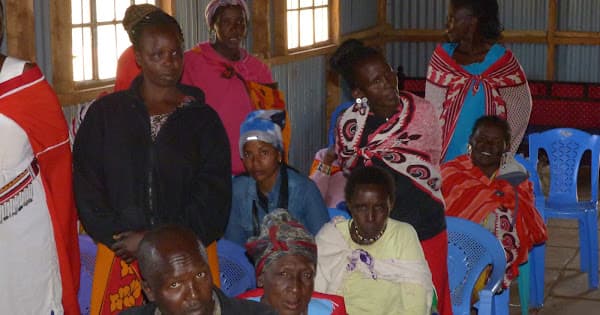
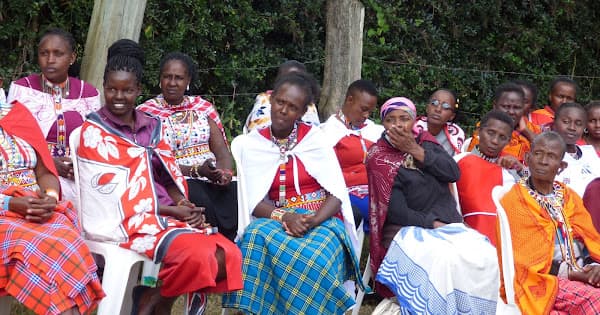
Three stills from this programme area—narrative and projects below.

Full programme narrative from MPIDO's programmes document (PDF).
Centering Women. Transforming Systems. Reclaiming Power.
From the programme document
The first document section is open. Expand others, or use Delivery and Projects for quick scans. Each block shows a different field still in the bar.
Introduction
GENDER PROGRAMME Centering Women. Transforming Systems. Reclaiming Power.
Overview
Across Indigenous pastoralist communities, women and girls carry the weight of resilience. They wake before dawn to sustain households, walk long distances in search of water and pasture, preserve cultural knowledge, and increasingly stand at the front line of climate change adaptation. Yet despite this central role, they remain the most affected and the most sidelined. Their access to education is often disrupted, their economic contributions undervalued, their voices underrepresented, and their rights constrained by deeply rooted socio-cultural norms. For girls, the pathway to education is often interrupted by early marriages, Female Genital Mutilation (FGM), and household responsibilities. For women, economic participation exists but largely without control, recognition, or decision-making power. For youth, especially young women, the space between tradition and opportunity continues to widen, leaving many without viable pathways to thrive. MPIDO’s Gender Programme is anchored in the understanding that these inequalities are not accidental; they are structural. And because they are structural, they must be intentionally transformed. The programme, therefore, goes beyond access and inclusion. It is about shifting power, dismantling barriers, and creating systems where women, girls, and youth are recognised not as dependents, but as leaders, economic drivers, and decision-makers shaping their communities and their future.
Girl Child Education & Rights Protection
Protecting Potential. Expanding Possibilities. In pastoralist contexts, educating a girl is often a negotiated outcome rather than a guaranteed right. Competing priorities, cultural expectations, and economic constraints frequently place girls at the margins of education systems. MPIDO responds to this reality by working at multiple levels, supporting the girl, engaging the family, and transforming the community environment around her. At the individual level, vulnerable girls are supported to stay in school through scholarships, bursaries, and the provision of essential learning materials. This support is often the difference between continuation and dropout, particularly in households facing economic hardship. Where distance and insecurity pose a
challenge, additional support mechanisms are explored to ensure that girls can access safe and stable learning environments. However, access alone is not enough. Many girls remain in school physically present, yet unsupported emotionally and socially. To address this, the programme invests in creating safe spaces where girls can express themselves freely, receive mentorship, and build confidence. Peer mentorship clubs, coupled with strengthened guidance and counselling systems, provide girls with the support structures they need to navigate both academic and personal challenges. At the community level, MPIDO recognises that lasting change cannot happen without addressing the norms that shape decisions around girls’ lives. Through sustained dialogue with parents, elders, morans, and local leaders, the programme challenges harmful practices such as FGM and early marriage not through confrontation, but through culturally grounded engagement that builds consensus and ownership. Community champions emerge from these processes, helping to shift perceptions and advocate for alternative pathways that protect girls’ rights while respecting cultural identity. At the systems level, the programme works closely with education stakeholders to improve the overall learning environment. This includes advocating for better infrastructure, adequate staffing, and improved learning resources, as well as strengthening school management structures through exposure and capacity-building initiatives. The result is a holistic approach where girls are not only enrolled in school but are supported to stay, perform, and transition into empowered futures. Education, in this sense, becomes more than literacy it becomes a tool for dignity, independence, and transformation.
Women & Youth Socio-Economic Empowerment Programme
For many women and youth in Indigenous Peoples pastoralist communities, poverty is not a result of inactivity; it is a result of systems that have historically limited access to capital, markets, land, and decision-making spaces. Women are constantly working: managing households, producing food, caring for livestock, sustaining social networks, and holding communities together during climate shocks. Youth are increasingly energetic, creative, and willing to engage in new forms of work. Yet both groups remain structurally constrained, working hard but often without control over income, ownership of enterprises, or access to financial systems that can transform effort into lasting opportunity. MPIDO responds to this imbalance by building practical, community-owned economic systems that move women and youth from survival-based livelihoods into structured enterprise, financial independence, and leadership in local economies. This is not short-term support. It is a deliberate strategy to build resilient, diversified, and locally owned economic ecosystems.
Enterprise Development & Women-Led Business Growth
At the heart of the programme is enterprise development supporting women and youth to build, strengthen, and scale their own businesses based on both traditional knowledge and emerging market opportunities. Women are supported to move from informal, unstructured economic activity into organized, income-generating enterprises. These include beadwork enterprises that are strengthened not only as
cultural expressions, but as structured value chains with improved design, quality control, branding, and market access. Through training and mentorship, women are supported to understand production cycles, pricing, packaging, and market positioning, transforming beadwork into a sustainable source of income that connects local culture to broader economic opportunities. Through this process, beadwork evolves from a cultural practice into a source of financial independence and influence. Women begin to earn a consistent income, contribute meaningfully to household needs, invest in their children’s education, and participate more actively in decision-making processes both at home and within the community. What was once seen as supplementary becomes central both economically and socially. Beyond beadwork, the programme supports diversification into other viable livelihood enterprises that are contextually appropriate and climate-resilient. Women are engaged in small-scale poultry farming, where chicken rearing becomes a reliable source of nutrition and income, especially in areas affected by drought and livestock loss. This intervention includes training on poultry management, disease control, feed production, and market linkage, ensuring that poultry farming is not just introduced but sustained as a viable business model. In addition, the programme supports beekeeping enterprises, particularly in ecological zones suitable for apiculture. Beekeeping is promoted as a low-cost, climate-friendly enterprise that contributes both to household income and environmental conservation. Women and youth are trained on hive management, honey harvesting, processing, and packaging, while also being supported to access local and regional markets. This creates dual benefits economic empowerment and ecosystem restoration through pollination and biodiversity enhancement. Small-scale trade and service-based businesses are also supported, particularly for youth and women transitioning from dependency to self-employment. These include retail kiosks, food businesses, and local service provision, all designed to strengthen local economies and reduce reliance on external support systems.
Revolving Fund & Community Financing Systems
A central pillar of the programme is the establishment and strengthening of revolving funds and community-led financial systems. These funds are designed as locally owned and managed financial mechanisms that provide women and youth with access to low-interest, flexible capital for business development. Unlike traditional grant-based support, revolving funds are intentionally structured to ensure that sustainability capital is reinvested into the community as loans are repaid, allowing more individuals to benefit over time. Women’s groups are trained and supported to manage these funds transparently, including savings mobilization, loan allocation, repayment tracking, and financial reporting. This not only strengthens economic activity but also builds financial discipline, trust, and collective accountability within groups. Through these revolving funds, women are able to start or expand businesses such as poultry farming, beadwork enterprises, small-scale retail shops, and agricultural ventures. Youth also access these funds to initiate income-generating activities aligned with their skills and local market opportunities. Over time, these community financial systems evolve into local economic engines, reducing dependency on external funding and strengthening internal resilience. More importantly, they shift control over resources into the hands of women and youth where it is most impactful.
Smart Agriculture & Climate-Resilient Livelihoods
Recognizing the changing climate realities, the programme integrates smart agriculture as a strategic livelihood diversification pathway, particularly for youth and women in suitable ecological zones. This is not conventional farming. It is climate-responsive, resource-efficient, and knowledge-driven agriculture designed for increasingly unpredictable weather patterns. Women and youth are trained in climate-smart farming techniques that include soil conservation, water-efficient irrigation, crop rotation, and integrated farming systems. Emphasis is placed on drought-resistant crops and improved seed varieties that can withstand climate variability while maintaining productivity. The programme supports the establishment of community seed banks, which serve as both conservation and resilience tools. These seed banks preserve indigenous crop varieties while ensuring that farmers have access to seeds adapted to local conditions. This strengthens food sovereignty and reduces dependency on external seed systems. In addition, the programme promotes small-scale irrigation and kitchen gardens, particularly for women, enabling households to produce vegetables for both consumption and sale. This improves nutrition, diversifies income, and enhances household resilience during drought periods. Youth are encouraged to view agriculture not as a fallback option but as a modern, innovative, and profitable livelihood pathway, supported by training, inputs, and market linkages.
Capacity Building, Leadership & Market Access
Economic empowerment is strengthened through continuous capacity building in entrepreneurship, financial literacy, and leadership development. Women and youth are trained not only to run businesses but also to understand value chains, negotiate markets, manage group enterprises, and make strategic financial decisions. This is complemented by mentorship and peer learning exchanges that expose them to successful enterprise models within and outside their communities. Market access remains a critical focus. The programme supports women and youth to connect with local, national, and regional markets through exhibitions, cooperatives, and digital platforms. This ensures that production is matched with demand and that enterprises move beyond subsistence into sustainable commercial activity.
Social Transformation Through Economic Empowerment
The impact of this programme extends far beyond income generation. As women gain financial independence through enterprises and revolving funds, their role in household and community decision-making increases significantly. They begin to invest in education, nutrition, and household stability, while also participating more actively in governance and leadership spaces. Youth, on the other hand, gain alternatives to unemployment and dependency. They become innovators, entrepreneurs, and contributors to local economies rather than passive observers of change. Through this process, economic empowerment becomes a driver of social transformation, gradually reshaping gender relations, reducing vulnerability, and strengthening community resilience.
The Change We Are Driving
This programme is not about isolated projects—it is about building economic systems owned and led by women and youth. It ensures that women are not confined to unpaid labor but are recognized as entrepreneurs and economic actors. It ensures that youth are not excluded from opportunity but are actively engaged in shaping local economies. It ensures that communities are not dependent on external systems but are building their own pathways to resilience and prosperity.
Our Approach in One Line
We build women and youth-led economies that transform livelihoods, shift power, and sustain resilient Indigenous communities.
Delivery & reach
What we deliver on the ground — 4 focus points
Delivery & reach
- Holistic girl-child support from access to retention, performance, and transition—with community ownership of norms change.
- Enterprise development with training, mentorship, market access, and financial literacy.
- Revolving funds and savings-and-loan systems that recycle capital within communities.
- Climate-smart farming inputs, seed banks, and income pathways that strengthen household resilience.